
Where I Belong
What I saw when work no longer filled my days

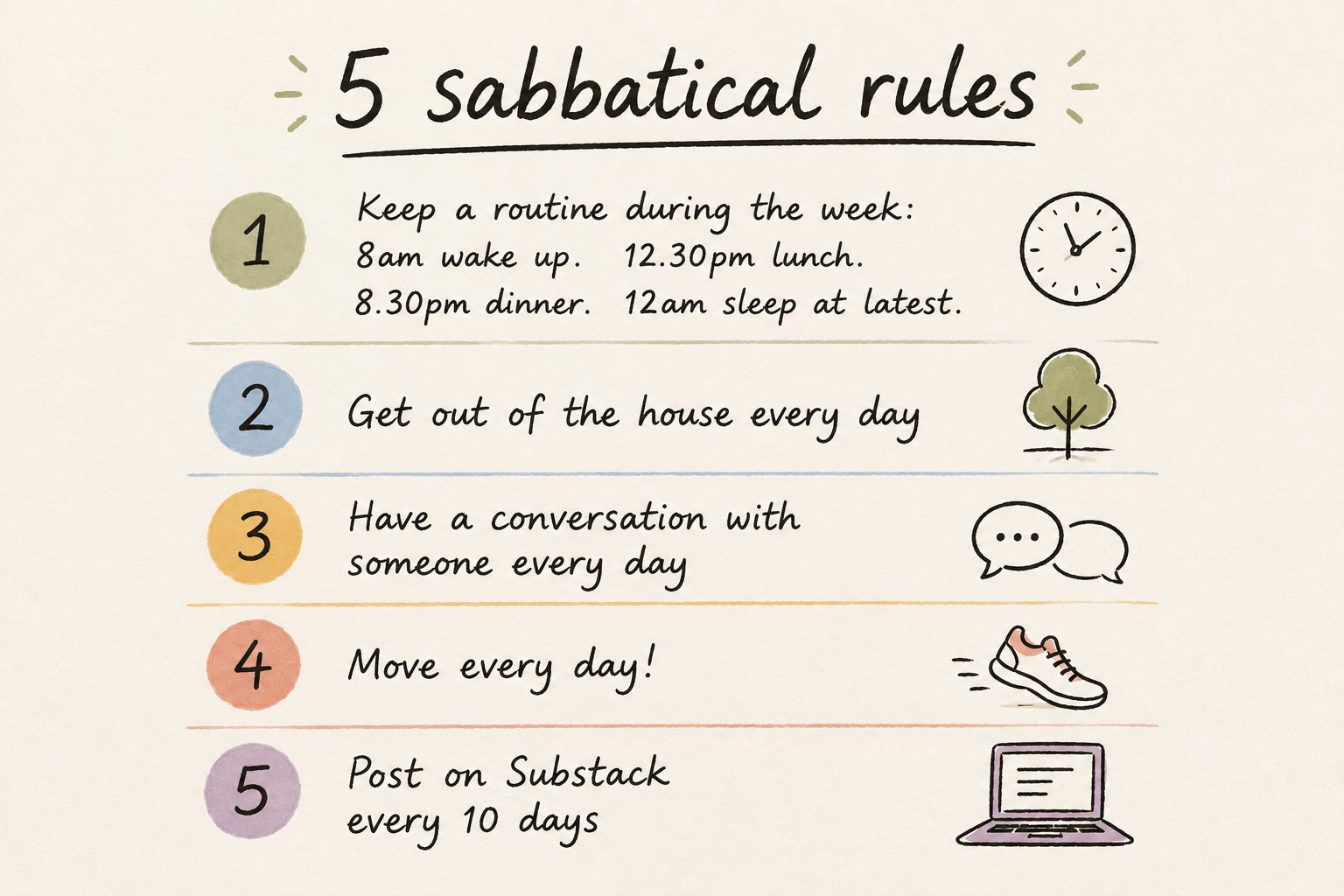
At the start of my sabbatical, I set these rules for myself.
It turned out I didn’t need them.
My biggest fear was to turn into a hermit, someone whose life would slowly descend into chaos, even though that would have been totally out of character as it is exactly the opposite of the kind of person I’ve always been. It was an irrational fear mainly fuelled by a lingering form of post-pandemic anxiety: sitting alone in my living room having video calls instead of in real-life human interaction was not an experience I wanted to relive. I dreaded it.
I have always been very gregarious. I’ve always enjoyed doing things with others. From a young age my days were filled with activities: school, sports, languages, play dates. As an adult, those activities changed, but the principle was the same. I never had one group of friends, I’ve always had many. I have always been part of a bigger group. I’ve never been on my own.
Slowly, however, work became the central piece around which my life revolved, most likely because it was the only constant in a nomadic life and it unconsciously became the main source of friends and acquaintances every time I stepped into a new city. It felt comfortable.
Over the years the office became my natural habitat, the place where I would spend many hours a day (sometimes too many) working but above all, engaging with others, discussing, enjoying a bit of banter. Lunch breaks were an oasis in meetings-filled agendas and a shared moment where anything could be discussed: from childcare to politics, from sports to philosophy. It was fun and stimulating. In the last years, Fridays at the office felt like spending time with friends in the café around the corner: just a handful of people with our own codes. Coffee, pastries we took turns buying, lunch together in the kitchen area, longer and more relaxed coffee breaks discussing our plans for the weekend. Physically going to the office gave me a sense of structure and a sense of purpose. But above all, it gave me a community I felt part of. I felt safe.
Then I stopped going to the office. Overnight.
As I started my sabbatical, stepping back from corporate life felt great. I was relieved and could finally have the space to breathe, to reflect, to think about doing things differently or a different thing. I didn’t have to go to the office anymore. And while that was part of being and feeling the freedom I had longed for, it was unsettling. It was the beginning of a new experience for me.
Following my rules, I started waking up at 8am – about half an hour later than usual. I didn’t need to rush anymore to get out of the house. I started my day catching up on the news, lingering over a cup of morning tea. I read and carefully replied to messages from friends I had received overnight. I checked with myself what mood I was in and how I wanted to spend the day. No agendas. No obligations. There was nowhere I had to be.
Judging by the many posts I read on Substack and articles on all sorts of publications, I was not alone. Missing the sense of community work gives us is a rite of passage of anyone going through a career transition, they said. Especially at 50 when you’ve spent over half your life working. This reassured me. I wasn’t making things up and all of a sudden the rules I’d written seemed even more sensible. To be my reminder, my nudge to take action if things came to the worst.
It turned out I didn’t need them.
Either I overestimated the issue or underestimated myself. Either way, the rules fell into the oblivion of my phone notes app as I soon found my own daily rhythm and very naturally, found community somewhere else. In the tennis club, at church, with my neighbours, with ex-colleagues and with friends – close and far. I didn’t have to start building those relationships. Even my morning routine very quickly incorporated a new ritual: having a quick check-in with other friends I knew had the time to chat. I felt connected. I had been silently sowing the seeds for a long time and now with more time and headspace, I could spend more time growing them.
In the past, everything had a time stamp and a limited slot. I could have lunch from 12 to 1pm, play tennis on Monday evenings after 7pm, help at church on Friday evenings or catch up with friends over WhatsApp late at night or in the evenings. Now, those constraints were gone. Conversations flowed until batteries ran out or restaurants closed. I could adapt to others’ agendas and needs instead of them adapting to me. I could hang out at the club or in the park. I could finally go back to people that I wanted to talk to but never made it to the top of the list.
In a strange twist of destiny, the neck pain, the limitations it brought, the surgery and the slow recovery also became catalysts to connect with others. Those around me were constantly in touch offering help and support. Amazing friends took turns to travel and be with me during the painful first weeks after the operation. I could have bought food for the rest of the year, judging by the number of offers I received to carry my shopping home. I couldn’t keep up with the number of text messages I was receiving every day with good wishes. I never felt alone. But most importantly, I realised I had to make the first step. Once I got over the shyness? embarrassment? pride? of asking for help, I saw the immense power of accepting vulnerability and reaching out to others. I cannot remember another time in my life where in spite of living on my own I felt so contained.
I didn’t become a hermit. I never was and will never be. Work proved not to be the most important community in my life. It had simply become too big, taking up space, hiding away the real communities that had always been part of my life and where I belong.
I didn’t need rules. I had community.
If you enjoyed this post then please do hit the ❤️ button - it shares the love by making it more visible to non-subscribers. Thank you!
I’m curious how my writing lands with you. If anything I share resonates (or doesn’t!), feel free to add your thoughts, your own story, or even a quiet “me too.”
If you enjoy reflections like this, consider subscribing to receive future posts.