
Being Invisible
On kindness, assumptions and the stories we cannot see

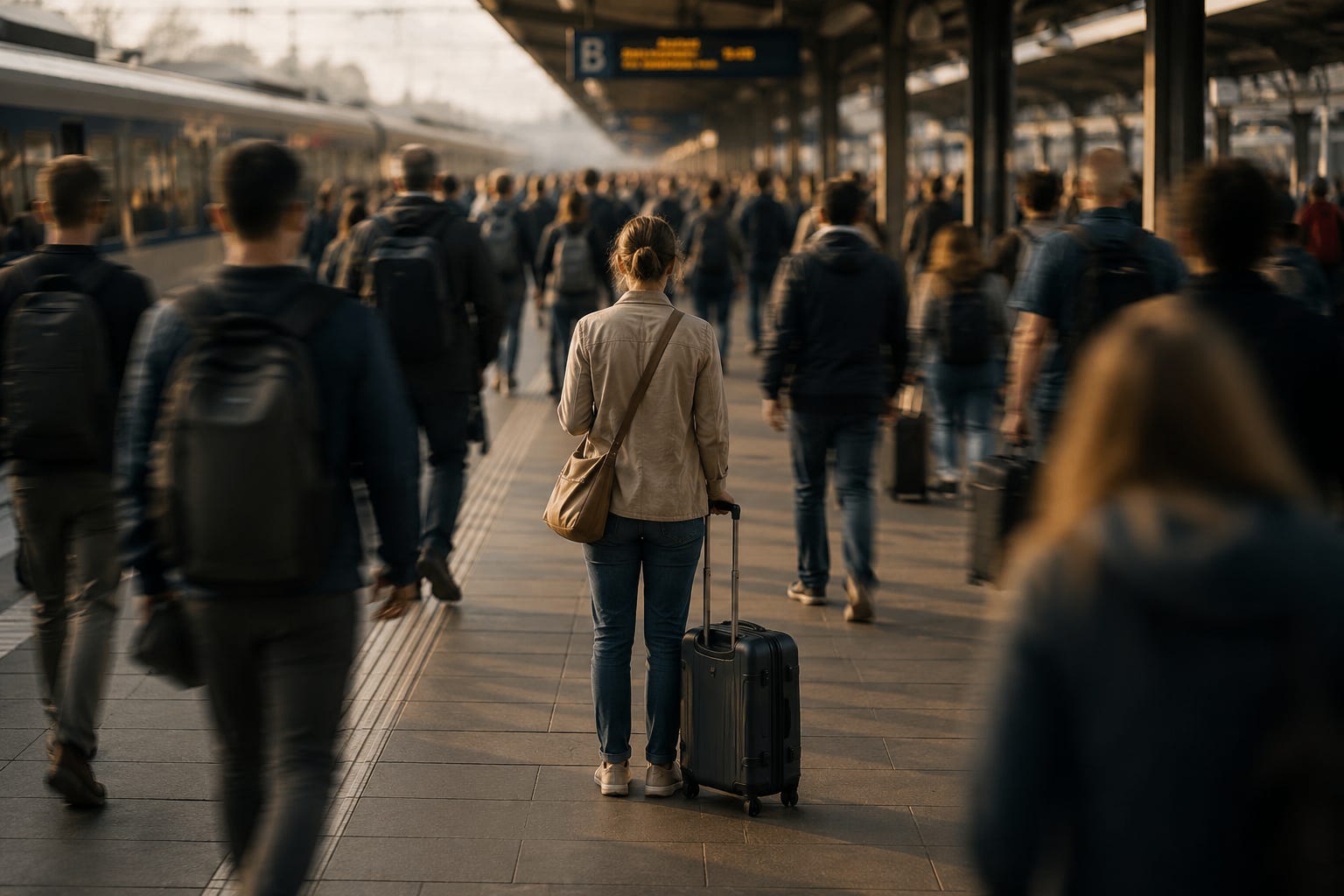
I was boarding the train back home after having spent a great weekend at my school reunion. I showed the conductor my ticket and kindly asked her for help to carry my small trolley bag up the two steps that separated the platform from the train. She refused to do so. Then, she turned to the person behind me in the line and asked for her ticket, ignoring the fact that I couldn’t step on the train. I became invisible to her.
I felt awkward. Was it that she didn’t believe I needed the help? After all, to the outside world I look like a perfectly healthy person. Would she have acted differently if I were using crutches or wearing anything that made it obvious that I had a physical problem, such as a cast? I didn’t know what to do. Should I insist, give her details of my ailment as I had been doing all weekend to anyone who had tried to hug me without knowing it would worsen my pain? I decided to ask the person behind me on the line for help. I didn’t feel like picking yet another fight. Nobody should have to.
This wasn’t the first bad experience of the day. Earlier, when I went to the left luggage office and was asked to put my bag in a scanner I couldn’t reach without making an effort I am not allowed to do, the clerk also refused to help. After I complained and showed her the scar in my neck explaining my issue, she reluctantly obliged. Since when do you need to disclose your medical history to a stranger to get help for a simple task? Not at a “special needs” desk where I was expecting sympathy and understanding.
Fortunately, there are also many others that were more empathetic and were happy to help. They don’t ask for explanations or proofs. Nor anything in exchange. Like the kind fellow traveller that interrupted his card game with his friends on the train to help me put my bag in the overhead compartment. Or my dear friend that left her sick child home to come pick me up to the other side of town so that I didn’t have to navigate the public transport system on my own.
I have always tried to be mindful of anybody that I could see needed help. However, I have also fallen into the trap of judging someone taking a priority lift that looked as though they didn’t need it or making use of some other service that I would think they weren’t entitled to, without knowing the whole picture. As with many things in life, I think I never understood what having an invisible physical disability meant until 9 months ago and in particular, the last 4 weeks after the operation. I have now experienced this situation firsthand and how the world reacts to it.
When we think about disabilities or limitations, we normally refer to the practical side. As I experienced myself, every time you want to get out of your house, you need to carefully plan ahead and in many cases, it means having to spare more time doing things – if you don’t want to spend much more money on things that should be accessible to everyone. Last Sunday, as I had my carry on stroller with me, I realised I couldn’t take the metro as most of the stations have stairs and that would have meant either lifting weight – a strict no go for me at this time – or constantly ask people for help. Instead, I had no option but to take the bus.
What has been more difficult for me is what we rarely see: the personal, human side. I have always been a very independent person. I’ve lived on my own for over twenty years and out of need -and sometimes pride- I have learned to do most things on my own, including assembling an IKEA queen-sized bed. So asking for help on small everyday tasks doesn’t come naturally – more than that, it’s a struggle.
When the warm weather began, I had to ask my neighbour to help me move a garden chair to my balcony so that I could enjoy some time outdoors. It wasn’t something difficult to do, but I couldn’t, so I had to ask for help. Then, my aunt kindly helped me change my bedsheets, which I would find very hard to ask a neighbour to do, as it feels very intimate and personal. It has been hard to ask for a seat in public transportation so that I wouldn’t expose myself to a potential fall or whiplash-type situation. Even though I had many offers of help to go to the supermarket, I chose to do small trips often rather than a big trip with someone else. I want to keep my autonomy.
Each ask for help is letting people in, is accepting my limitations. I feel exposed. Embarrassed, even, to need help when I’m only fifty years old. I’m in the prime of my life and nine months into a sabbatical, I should be climbing mountains, sailing through warm seas, exploring the world, not asking for help to do mundane things. This was not how I had pictured my time off.
If my sabbatical was partly about looking at things from a different perspective, this experience has taken the lesson a step further as it has not only enabled me to think about the challenges of invisible physical disabilities but way beyond that. It has made me consider the importance of empathy in everything we do. In not judging without having the whole story. In not needing the whole story to be kind and compassionate. We are all different human beings and there is much more to every one of us than what we see. Today, I have a neck problem. Others carry their own stories. And we all deserve to be understood and respected. Nobody should be invisible.
If you enjoyed this post then please do hit the ❤️ button - it shares the love by making it more visible to non-subscribers. Thank you!
I’m curious how my writing lands with you. If anything I share resonates (or doesn’t!), feel free to add your thoughts, your own story, or even a quiet “me too.”
If you enjoy reflections like this, consider subscribing to receive future posts.